Part 2 - Prompting Is a Skill, Not a Secret Formula
Effective prompting isn't about memorizing magic phrases or copying complicated templates; it's about communicating your objective, context, constraints, and desired outcome. The right amount of detail depends on the task, and even a well-constructed prompt requires critical evaluation of the response.
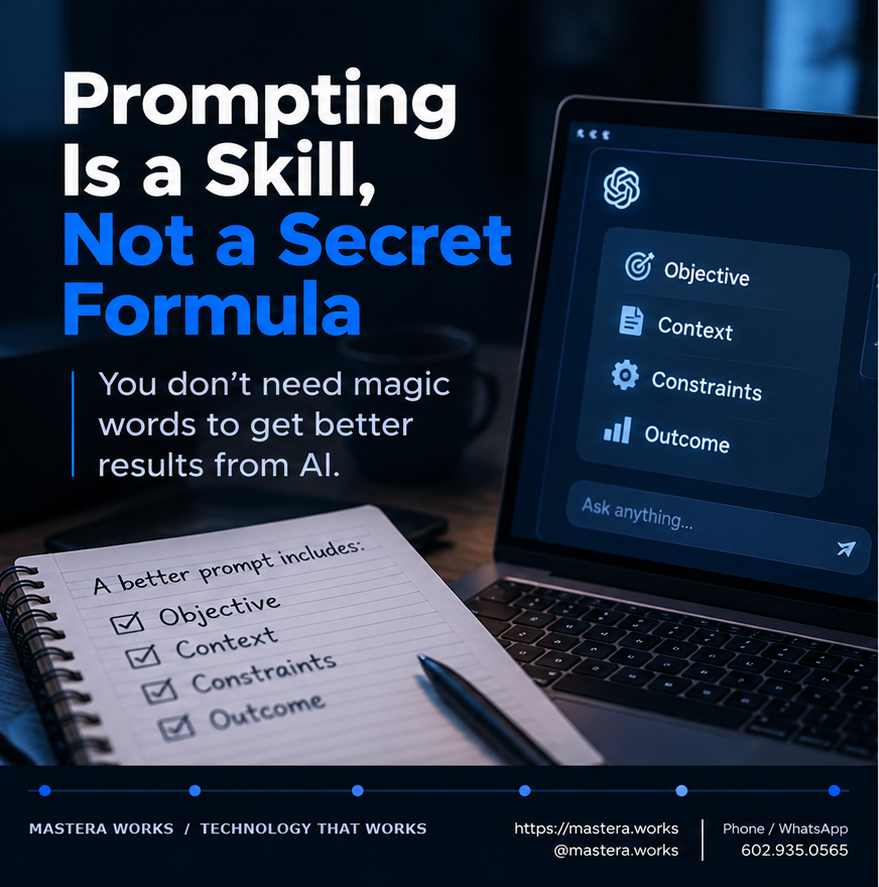
Prompting Is a Skill, Not a Secret Formula
You don't need magic words to get better results from AI. You need to communicate better.
There's no shortage of so-called perfect prompts circulating online. Copy this template. Use these magic words. Tell the AI to act as an expert. Add a few technical instructions, and watch the results improve.
Some of these techniques can help. But they can also distract us from what matters most.
Effective prompting isn't about memorizing a formula. It's about understanding what you're asking AI to do and giving it the information it needs to do it well.
Consider the difference.
A weak prompt:
"Create a marketing strategy for my business."
A stronger prompt:
"Develop a 90-day marketing strategy for a small B2B software company targeting compliance professionals. Our budget is $5,000, and we have no dedicated marketing team. Prioritize affordable channels, provide a weekly action plan, and define measurable success metrics."
The second prompt doesn't use secret terminology. It simply provides a clear objective, relevant context, constraints, and expectations.
That same principle applies whether you're writing code, preparing a presentation, researching a topic, or improving a business process.
Before submitting your next prompt, consider four things:
- Objective: What am I trying to accomplish?
- Context: What does the AI need to know?
- Constraints: What limitations must it respect?
- Outcome: What should the finished result look like?
Not every request needs a lengthy explanation. Simple tasks deserve simple prompts. Complex tasks require more thought.
The skill is knowing how much direction the situation demands.
And remember: a detailed prompt doesn't guarantee an accurate answer. You still need to evaluate the result, verify important claims, and use your own judgment.
Stop searching for the perfect prompt. Start learning how to construct the right one.
Continue with Part 3: Stop Asking AI Questions. Start Directing Outcomes.